Pasteurizers & sterilizers · · 10 min read
Aseptic Processing and Filling: Milk, Juice and Tomato Paste
Aseptic processing explained: commercial sterility, FDA 21 CFR 113 rules, cartons, PET and bag-in-drum filling, and how to match sterilizer and filler.
By the process engineering team at Shanghai Mars Industrial Co., Ltd.

Key takeaways
- Aseptic processing sterilizes food outside the package, then fills it into presterilized containers sealed in a sterile zone, giving months of ambient shelf life.
- FDA classes foods with pH above 4.6 and water activity above 0.85 as low-acid; their aseptic processes fall under 21 CFR 113 and are filed on Form 2541g.
- 21 CFR 113.40 requires an unheated holding tube sloping upward at least 2.1 cm per metre, a recorder at its outlet, and sterile product kept at least 1 psi above raw product in regenerators.
- FDA allows hydrogen peroxide up to 35% by weight for sterilizing food-contact packaging, with residues no higher than 0.5 ppm.
- Tomato paste and fruit pulp are commonly filled into aseptic bags in drums of about 220 litres, using tubular or tube-in-tube sterilizers matched to the filler.
What is aseptic processing?
Aseptic processing sterilizes a liquid or pumpable food outside the package, cools it, and fills it into separately sterilized containers that are sealed in a sterile environment. The result is a commercially sterile product, such as UHT milk, juice or tomato paste, that keeps for months without refrigeration.
Unlike canning or retorting, where the food is heated after sealing, aseptic processing treats the product in thin streams in a heat exchanger for seconds rather than minutes. That gentler heat load preserves colour, flavour and nutrients, and allows very large containers, from small cartons up to bag-in-drum and bulk bin systems. This guide explains what aseptic manufacturing involves, what US FDA rules (21 CFR 113) require, which aseptic filling equipment suits milk, juice and tomato paste, and how to match a sterilizer to an aseptic filler.
What does aseptic and commercially sterile mean?
"Aseptic" means free from contaminating microorganisms. FDA defines aseptic processing and packaging as filling a commercially sterilized, cooled product into presterilized containers and sealing them aseptically. Commercially sterile food is free of microorganisms able to grow under normal non-refrigerated storage, not absolutely free of every microbe.
Under 21 CFR 113.3, commercial sterility of food is achieved by heat, or by heat combined with water activity control, so that microorganisms capable of reproducing in the food at ambient storage are eliminated. Commercial sterility of equipment and containers is achieved by heat, chemical sterilants or another suitable treatment. An Indian national e-learning module on food packaging (e-PG Pathshala) summarizes the aseptically packaged definition as independent sterilization of the food and the package, then assembly under sterile conditions.
The acidity of the product decides how hard it must be heated. FDA defines low-acid foods as those (other than alcoholic beverages) with a finished equilibrium pH above 4.6 and water activity above 0.85. Milk and most plant-based drinks are low-acid and need UHT-level treatment; tomato paste, most fruit juices and fruit pulps are high-acid and can be made commercially sterile at lower temperatures. For milk-specific temperatures and the difference between UHT and ultra-pasteurized milk, see our guide to UHT vs pasteurized milk.
What does FDA 21 CFR 113 require for aseptic processing?
21 CFR Part 113 governs thermally processed low-acid foods in hermetically sealed containers, including aseptic systems. It requires a scheduled process set by qualified experts, calibrated temperature instruments, a recorder at the holding-tube outlet, an unheated upward-sloping holding tube, pressure protection in regenerators, pre-sterilization, and regular records.
Part 113 covers thermally processed low-acid foods packed in hermetically sealed containers. The scheduled process must be established by qualified persons with expert knowledge of thermal processing (21 CFR 113.83). Processors register their establishment with FDA on Form 2541 and file each low-acid aseptic process on Form 2541g. Key equipment and operating requirements in 21 CFR 113.40(g) include:
| Element | Requirement |
|---|---|
| Temperature-indicating device | Accurate to 0.5 °C (1 °F); tested against a traceable reference at installation and at least yearly |
| Temperature recorder | Sensor at the holding-tube outlet, between holding tube and cooler inlet |
| Holding tube | Holds every particle for at least the scheduled time; not heated along its length; slopes upward at least 2.1 cm per metre (1/4 inch per foot) |
| Product-to-product regenerator | Sterile product kept at higher pressure; product diverted if the margin falls below 1 psi (6.9 kPa) |
| Differential pressure recorder-controller | Accurate within 2 psi (13.8 kPa); tested at installation and at least every 3 months |
| Flow control | Flow control device upstream of the holding tube, protected against unauthorized adjustment |
| Downstream seals | Steam seals or equivalent barriers on shafts, valve stems and instrument connections after the holding tube |
| Start-up | Sterilizer, downstream surfaces and packaging system brought to commercial sterility before production |
| Packaging system | Recorders for sterilant flow, temperature and concentration; controlled cycle rate |
| Records | Holding-tube temperature, pressure differential and flow at intervals of no more than 1 hour; critical factors at least every 15 minutes |
If temperature or pressure falls out of limits, product must be diverted or segregated and the system restored to commercial sterility before restarting. Even if you do not export to the US, these requirements are a practical template for designing and auditing any aseptic process equipment.
How does an aseptic processing line work?
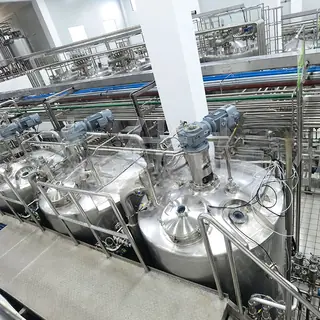
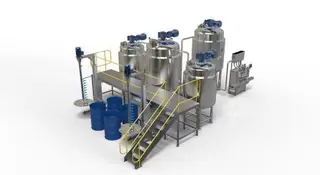
An aseptic line feeds product from a balance tank through regenerative preheating, homogenization if needed, a sterilizer and holding tube, and coolers into a sterile aseptic tank, then to an aseptic filler. Everything downstream of the holding tube is pre-sterilized and kept sterile throughout production.
The aseptic processing operation follows a fixed sequence:
- Pre-sterilization: before production, hot water or steam sterilizes the downstream section. The Tetra Pak Dairy Processing Handbook calls for at least 125 °C at all points in a UHT plant's aseptic section, held for at least 30 minutes.
- Feed: a balance tank and pump (or a positive displacement pump for thick paste) give constant flow.
- Preheating and homogenization: regenerative heating; milk and plant-based drinks are homogenized.
- Sterilization and holding: the product is heated to the scheduled temperature and held in the holding tube for the scheduled time.
- Cooling: regenerative and water cooling, or vacuum flash cooling in direct UHT systems.
- Aseptic tank: a sterile buffer under sterile air overpressure that balances sterilizer and filler output.
- Aseptic filling: containers or bags are sterilized, filled and sealed in a sterile zone.
- Cleaning and incubation checks: CIP after production; representative samples are incubated before release. The e-PG Pathshala module suggests 5–7 days at 30 °C.
For milk, our UHT long-life milk production line follows this sequence. For juice and beverages, see the UHT fruit juice and carbonated beverage line.
Which aseptic packaging suits milk, juice and tomato paste?
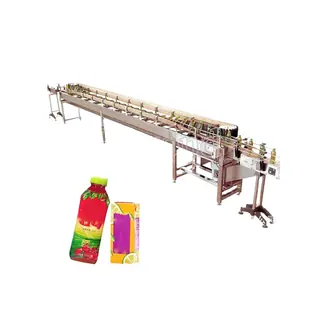
Retail milk and juice are usually filled into aseptic cartons or PET and HDPE bottles; ingredients such as tomato paste, fruit pulp and concentrates are filled into aseptic bags in drums, boxes or bins for re-processing. The choice depends on the customer, distribution distance and container size.
| Format | Typical products | Container sterilization | Notes |
|---|---|---|---|
| Laminated paperboard carton | UHT milk, plant-based drinks, juice | Hydrogen peroxide, then hot air to remove residue | Laminate can include as many as six layers, typically paperboard, polyethylene and aluminium foil |
| PET or HDPE bottle | Juice, flavoured milk, teas | Chemical sterilant such as hydrogen peroxide | Rigid retail pack; needs an enclosed sterile filling zone |
| Bag-in-box | Fruit pulp, juice concentrate, dairy ingredients | Pre-sterilized bag; fitment sterilized at filling | Bulk systems for food service and manufacturers |
| Bag-in-drum | Tomato paste, mango and other fruit pulp, concentrates | Pre-sterilized bag; fitment sterilized at filling | About 220 L (about 200 kg) drums are a common trade format for tomato paste |
| Bins and larger totes | Tomato paste, pulp for large re-packers | Pre-sterilized liner | Used for very large volumes; requires forklift handling |
FDA permits hydrogen peroxide solutions of up to 35% by weight for sterilizing food-contact packaging, provided residues stay at or below 0.5 ppm when distilled water is packed under production conditions (21 CFR 178.1005). According to the e-PG Pathshala module, recognized packaging sterilization methods also include steam, hot air, ultraviolet light, irradiation and the heat of co-extrusion for certain films. For non-aseptic filling options, see our liquid filling machine guide.
How does aseptic bag-in-drum and bag-in-box filling work?
A bag-in-box or bag-in-drum filler places a pre-sterilized bag in its outer container, sterilizes the bag's spout inside a sterile chamber, opens it, fills the cooled sterile product by weight or volume, then re-seals it before the bag leaves the sterile zone. It suits high-volume pastes, pulps and concentrates sold to food manufacturers.
Tomato paste and fruit pulp are classic aseptic products: the e-PG Pathshala module notes that semi-solid foods such as tomato paste and fruit pulp can now be processed aseptically, and lists metal drums and bag-in-box as the bulk aseptic formats. A trade analysis of the tomato paste supply chain describes industrial paste as heavily traded in aseptic bag-in-drum systems of about 220 litres (around 200 kg), shipped and stored for months as a shelf-stable concentrate.
The process for paste and pulp is typically:
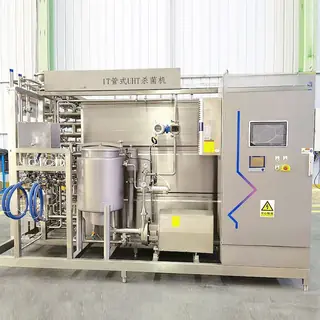
- Paste from the evaporator is pumped by a positive displacement pump to a tubular or tube-in-tube sterilizer.
- The product is heated, held for its validated time, then cooled in the same unit before filling, which protects colour and flavour.
- The bag filler sterilizes the spout area, fills to the target weight and closes the bag inside the sterile chamber.
- Drums or boxes are closed, coded and palletized; samples are incubated before release.
Our 3,000 kg tomato paste line with aseptic drum filling combines evaporation, sterilization and bag-in-drum filling. For pulp and concentrates, the tube-in-tube sterilizer for mango pulp and fruit concentrate and the tube-in-tube sterilizer for fruit pulp and concentrate are designed to feed aseptic bag fillers, and our mango pulp, juice and jam processing line shows a complete pulp plant. Upstream steps are covered in our tomato paste processing line guide.
If you are planning a paste or pulp project, our engineers can match a sterilizer and aseptic filler to your daily tonnage and drum or bag format.
How do you match the sterilizer to the aseptic filler?
Match the sterilizer's hourly capacity to the filler's maximum speed plus a margin, place a sterile aseptic tank between them, choose a heat exchanger suited to viscosity and particle size, and make sure both units share compatible sterilization, CIP and fault-handling logic. Mismatched units cause recirculation, product damage and lost output.
- Capacity: convert the filler's packs per hour into litres or kilograms per hour, then add a margin; our line planner helps with this conversion.
- Buffering: the Dairy Processing Handbook explains that an aseptic tank stores surplus product, balances supply to several fillers and lets the sterilizer be cleaned without stopping filling.
- Heat exchanger type: plate units suit milk and clear juice; an IFT article notes that plate gaps are too small for foods with solid pieces, and that particles larger than about 12 mm are typically handled in scraped-surface units with piston pumps. Tubular and tube-in-tube units suit pulp, paste and viscous products.
- Particle size and heat damage: the same article warns that particles above about 9 mm risk overcooking on indirectly heated surfaces, so pulp and dice need careful design.
- Return and diversion: define what happens when the filler stops: recirculation, aseptic tank storage or diversion to waste.
- Utilities: steam pressure, sterile air, cooling water and power must cover sterilizer and filler simultaneously; confirm voltage and 50 or 60 Hz frequency.
The Tetra Pak handbook cites direct UHT plants of about 2,000–45,000 L/h and indirect tubular plants up to about 40,000 L/h, but many projects in Africa, the Middle East and Asia start at a few hundred to a few thousand litres or kilograms per hour. At these smaller scales, a single sterilizer feeding a single bag or carton filler is common, and the aseptic tank may be omitted if the filler accepts recirculation. Browse all pasteurizers and sterilizers for capacity ranges.
What should an aseptic filling system specification include?
A complete specification states the product and pH, viscosity and particle size, scheduled process temperature and time, hourly capacity, packaging format and size, sterilization method for product, equipment and packaging, CIP and pre-sterilization cycles, controls and records, and utilities. Without these, aseptic filling machine quotations cannot be compared.
- Product, pH and water activity (low-acid or high-acid).
- Brix, viscosity and maximum particle size.
- Validated or target sterilization temperature and holding time.
- Hourly capacity and daily production hours.
- Packaging: carton, bottle, bag-in-box, bag-in-drum or bin, with sizes.
- Packaging sterilization method and sterilant consumption.
- Pre-sterilization and CIP programs, with times and temperatures.
- Temperature, pressure and flow recording and automatic diversion.
- Sterile air system and overpressure in the aseptic tank and filling zone.
- Product-contact materials (AISI 304 or 316L) and seal types.
- Utilities, voltage and frequency, and ambient conditions for tropical sites.
When we engineer an aseptic line, we design the sterilizer, aseptic tank and filler as one system with a single control logic for pre-sterilization, production and loss-of-sterility events, so that operators have one clear procedure to follow.
What information do you need for a quotation?
Send your products with pH and Brix, daily volume and hours, target shelf life, packaging format and size, existing upstream equipment, utilities, local voltage and frequency, and site layout. Our engineers then propose a sterilizer, aseptic tank and filler configuration with a budget quotation.
- Products: milk, plant-based drink, juice, tomato paste, fruit pulp or concentrate.
- pH, Brix, viscosity and any particles or fibres.
- Daily volume, production hours and required hourly capacity.
- Target shelf life and storage conditions.
- Packaging format and size: carton, bottle, bag-in-box, 220 L drum or bin.
- Upstream equipment already installed (evaporator, extractor, homogenizer).
- Steam, cooling water, compressed and sterile air availability.
- Power supply: voltage, frequency (50/60 Hz) and phase.
- Building drawings or available floor area.
Send your information through our quotation request form, by email to [email protected] or via WhatsApp +86 176 2154 1688.
Frequently asked questions
What is aseptic processing?
Aseptic processing is a method in which a pumpable food is sterilized in a heat exchanger, cooled, and filled into separately sterilized containers that are sealed in a sterile environment. The food becomes commercially sterile and shelf-stable without refrigeration. It is used for UHT milk, plant-based drinks, juices, tomato paste, fruit pulp and concentrates.
What is the difference between aseptic filling and hot filling?
In aseptic filling, the product is sterilized and cooled before filling into presterilized containers inside a sterile zone, so heat-sensitive products and lightweight packages can be used. In hot filling, the hot product itself sterilizes the inside of the container, which limits it to high-acid products and heat-resistant packaging such as glass or special PET.
Does aseptic processing require FDA approval?
For low-acid foods sold in the United States, processors must register with FDA on Form 2541 and file each aseptic process on Form 2541g, and follow 21 CFR Part 113. The scheduled process must be established by qualified persons with expert knowledge of thermal processing. High-acid products fall under other FDA rules.
What is aseptic bag-in-drum filling?
Aseptic bag-in-drum filling places a presterilized plastic bag inside a steel or fibre drum, sterilizes the bag spout within a sterile chamber, fills the cooled sterile product by weight, and seals it. It is widely used for tomato paste, fruit pulp and concentrates, commonly in drums of about 220 litres holding around 200 kg.
How long does aseptically packaged food last?
Aseptically packaged foods are shelf-stable at ambient temperature until opened. Educational sources describe heat-sterilized foods lasting 6 to 12 months or more, while actual shelf life depends on the product: UHT milk is often designed for three to nine months, limited by physical and flavour changes rather than microbial spoilage.
What does aseptic mean in food manufacturing?
In food manufacturing, aseptic means handled in a way that prevents contamination by microorganisms. Aseptic manufacturing sterilizes the food, the packaging and the equipment separately, then fills and seals the package in a sterile environment. The aim is commercial sterility: no microorganisms able to grow under normal non-refrigerated storage.
Sources
- 21 CFR 113.3 Definitions (aseptic processing, commercial sterility, low-acid foods) – Cornell LII
- 21 CFR 113.40 Equipment and procedures (aseptic systems, paragraph g) – Cornell LII
- 21 CFR 113.83 Establishing scheduled processes – Cornell LII
- FDA – Guidance: Submitting Form FDA 2541 and process filing forms (2541d/e/f/g)
- 21 CFR 178.1005 Hydrogen peroxide solution – Cornell LII
- Tetra Pak Dairy Processing Handbook – Long-life dairy products
- e-PG Pathshala (INFLIBNET) – Aseptic packaging of food
- IFT Food Technology – Aseptic processing and packaging of particulate foods
- Tridge – Tomato paste supply chain map (aseptic bag-in-drum formats)