Cheese & butter equipment · · 10 min read
Cheese Making Equipment List: Vats, Presses, Moulds and Lines
Cheese making equipment list by cheese type: vats, cheese presses, moulds, mozzarella stretchers and whey handling, with vat sizing and a buyer checklist.
By the process engineering team at Shanghai Mars Industrial Co., Ltd.

Key takeaways
- Cheese milk is commonly pasteurized at 72–73 °C for 15–20 seconds, renneted at about 31–33 °C and coagulates in about 30 minutes, according to the Tetra Pak Dairy Processing Handbook.
- Most hard and semi-hard cheeses need 90–120 minutes of curd making in the vat, which limits a single cheese vat to a few fills per shift.
- Commercial cheese presses work in 3–10 steps of increasing pressure, from about 50 up to 450 g/cm², with curd typically spending 60–100 minutes in the mould.
- Whey makes up 80–90% of the milk volume entering cheese making and carries about half of the milk's nutrients, so whey handling must be planned with the cheese line.
- As a rule of thumb, about 10 kg of milk makes 1 kg of cheese, so a plant taking 10,000 L of milk per day produces roughly 1,000 kg of cheese and 8,000–9,000 L of whey.
What cheese making equipment do you need?
Every cheese plant needs milk reception and cooling, a pasteurizer, a cheese vat for coagulation and curd making, whey drainage, moulds, a cheese press or brine system, and cold rooms for ripening or storage. Mozzarella adds a cooker-stretcher; hard and semi-hard cheese add pre-pressing, pressing and long ripening.
The right cheese making equipment depends first on the cheese you make. A fresh cheese such as paneer, queso fresco or white brined cheese needs little more than a vat, draining tables and moulds. Pasta filata cheese needs heat and mechanical stretching. Hard cheese needs pressure, time and controlled ripening rooms. This list groups commercial cheese making equipment by cheese type, explains how to size a cheese vat and a cheese press, and shows how whey is produced and handled, so you can compare each cheese making machine and quotation on the same basis.
What are the steps of the cheese production process?
The cheese production process has eight core steps: treat and standardize the milk, add starter culture, coagulate with rennet or acid, cut the curd, stir and heat (scald) it, drain the whey, form and press the curd, then salt and ripen or pack. Each step maps to a specific piece of cheese processing equipment.
- Milk treatment. According to the Tetra Pak Dairy Processing Handbook, cheese milk is commonly pasteurized at 72–73 °C for 15–20 seconds, or thermized at 65 °C for 15 seconds and cooled to about 4 °C if it cannot be processed within about 12 hours. Some traditional hard cheeses, such as original Emmental or Parmesan, use milk heated no higher than 40 °C.
- Standardization. A centrifugal separator sets the fat-to-protein ratio; surplus cream can go to butter.
- Starter and additives. Culture is added and the milk pre-ripened for about 30–60 minutes. The handbook gives calcium chloride doses of 5–20 g per 100 kg of milk.
- Coagulation. Rennet is added at about 31–33 °C in practice, and coagulation typically takes about 30 minutes.
- Cutting and stirring. The coagulum is cut into grains of 1–15 mm depending on the cheese, then stirred.
- Scalding and whey drainage. The curd is heated to firm it and expel whey; for most hard and semi-hard cheeses the full curd-making time is 90–120 minutes.
- Moulding and pressing. Curd is filled into moulds and pressed in several steps of increasing pressure.
- Salting and ripening. Cheese is brined or dry-salted, then ripened, waxed or vacuum packed.
Cheese is concentrated milk, so volumes matter. The cheesescience.org yield guide cites the long-standing rule of about 10 kg of milk per kilogram of cheese, with roughly 10% yield common for some varieties. The rest leaves as whey, which we cover below.
Which equipment does each cheese type need?
Fresh cheese needs a heated vat, draining equipment, moulds and fast chilling. Mozzarella and other pasta filata cheeses add a curd mill, a cooker-stretcher, a moulder and brine cooling. Hard and semi-hard cheeses add enclosed vats or drainage columns, pre-press vats, pneumatic presses, brine systems and ripening rooms.
| Stage | Fresh / soft (paneer, queso fresco, white cheese) | Pasta filata (mozzarella, kashkaval) | Hard and semi-hard (cheddar, Gouda, Emmental) |
|---|---|---|---|
| Milk treatment | Pasteurizer, separator | Pasteurizer, separator | Pasteurizer or thermizer, separator, optional bacteria-removing centrifuge |
| Coagulation | Open jacketed vat; acid or rennet | Cheese vat with cutting and stirring tools | Enclosed horizontal or vertical vat |
| Curd handling | Draining table, cloth bags or perforated moulds | Draining belt or cheddaring, curd mill | Buffer tank, drainage column or pre-press vat |
| Shaping | Moulds, light pressing | Cooker-stretcher, moulding machine | Micro-perforated moulds, pneumatic press |
| Salting | Salt in curd or brine | Cold brine or dry salter | Brine system (18–23% salt) |
| Finishing | Chill, pack, short shelf life | Chill, pack, or freeze | Ripening rooms for weeks to months |
Fresh and white cheese
Fresh cheeses are the simplest entry point. The handbook gives curd-making times of up to one hour for queso fresco and under one hour for paneer, while acid-set cottage cheese can take more than six hours to reach pH 4.6–4.7. Equipment is mainly a jacketed cheese vat of 300–2,000 L, draining trolleys and moulds. Our soft and white cheese production line packages these for small plants.
Mozzarella and pasta filata
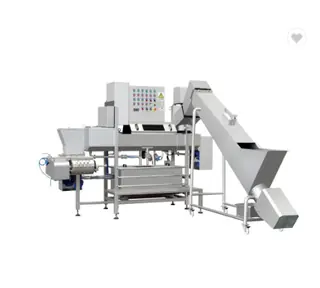
For pasta filata, curd is acidified until it stretches when heated. The handbook gives whey acidity of about 0.7–0.8% lactic acid before stretching, mixing water at 65–70 °C, and curd entering moulds at 55–65 °C. Normal brining takes about 8 hours, which a dry salter can cut to 2 hours. The heart of the line is a mozzarella cooker-stretcher of 1–5 t/h, with auger and arm design matched to the curd and moisture target.
Hard and semi-hard cheese
Hard cheese is all about controlled whey removal. Cheddar is heated slowly, at 0.2–0.5 °C per minute according to the handbook, and drained at a curd pH of about 6.0–6.1; Emmental and Parmesan types are scalded at 50–56 °C. A cheese vat for cheddar, mozzarella and Emmental handles these profiles with a frequency-controlled cutting and stirring frame. At larger scale, drainage columns and block formers take over; the handbook describes block formers producing uniform blocks of about 18–20 kg.
How do you choose and size a cheese vat?
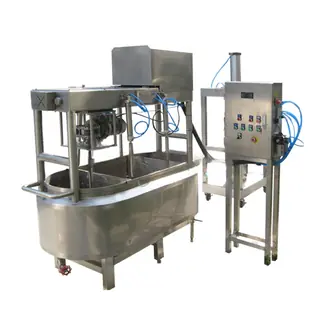
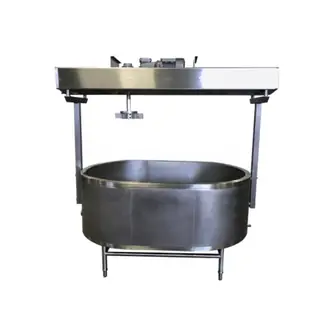
Size a cheese vat from the daily milk volume, the number of fills you can complete per shift and the curd-making time of your cheese. Choose an open jacketed vat for fresh cheese and small batches, and an enclosed vat with motorized cutting and stirring frames, a heating jacket and CIP nozzles for hard and semi-hard cheese.
A cheese making vat is more than a tank. It must heat milk evenly, keep it perfectly still during coagulation, cut the gel cleanly and stir curd without shattering it. The handbook notes that milk should be at a standstill within 5–7 minutes after rennet is added and that stirring should not stop for more than about 8 minutes during whey drainage, or the curd will lump.
Look for these features when comparing industrial cheese making equipment:
- Jacket for hot water heating and cooling, with accurate temperature control
- Interchangeable cutting and stirring frames, ideally with variable-speed drive
- Whey strainer and outlet sized for fast drainage
- CIP spray nozzles and a fully drainable, polished interior (AISI 304 or 316L)
- Recipe control for heating rate, stirring speed and times
| Milk per day | Approximate cheese per day | Approximate whey per day | Typical vat set-up |
|---|---|---|---|
| 1,000 L | About 100 kg | 800–900 L | One 1,000 L vat, one fill |
| 2,000 L | About 200 kg | 1,600–1,800 L | One 1,000 L vat, two fills, or one 2,000 L vat |
| 5,000 L | About 500 kg | 4,000–4,500 L | Two to three vats in rotation |
| 10,000 L | About 1,000 kg | 8,000–9,000 L | Enclosed vats or a semi-automatic line |
| 20,000 L and above | About 2,000 kg or more | 16,000–18,000 L or more | Automated line with drainage columns or block formers |
Actual yield varies with milk fat and protein, moisture target and cheese type, so treat these figures as a starting point. With 90–120 minutes of curd making per batch plus filling, emptying and cleaning, a vat rarely completes more than three or four fills in a shift. If you are planning a whole cheese processing plant, our line planner helps balance vats, presses and brine capacity, and our engineers can size the vats for your recipe through a quotation request.
What does a cheese press do and how much pressure does it need?
A cheese press consolidates curd in moulds, expels remaining whey and forms a closed rind. The Tetra Pak handbook describes pressing in 3–10 steps of increasing intensity, at pressures from about 50 up to 450 g/cm² of cheese surface, with total mould time typically 60–100 minutes.
Light pressure first lets the outer layer close without trapping whey; pressure then rises in steps. When you compare a cheese press for sale, it may be a simple screw press, a horizontal or vertical pneumatic press with several stations, or a tunnel press in automated lines. Pneumatic presses are the usual choice for commercial plants because each station gets the same programmed pressure profile.
Moulds matter as much as the press. The handbook describes micro-perforated moulds that pass through a rinsing or washing station about every 2 hours. When comparing cheese moulds for sale, check:
- Food-grade stainless steel or approved food-contact plastic, with smooth, cleanable surfaces
- Perforation pattern suited to the cheese type and rind
- Uniform weight and dimensions so pressed cheeses match your pack size
- Compatibility with your press plates, trolleys and mould washer
Cheese molds in stainless steel last longer and tolerate hot cleaning, while plastic moulds with liners are lighter and common in larger automated lines. For small plants, our small cheese press and mould machine combines both functions. Small kits of cheese making tools and home presses are fine for recipe trials, but they do not give the repeatable pressure profile a commercial cheese press machine needs.
How is whey produced and what should you do with it?
Whey is produced when rennet or acid coagulates casein and the curd is cut, stirred and drained; the greenish liquid that leaves the curd is whey. According to the Tetra Pak handbook, it makes up 80–90% of the milk volume entering the cheese process and carries about half of the milk's nutrients.
Whey is therefore your largest by-product and, untreated, a serious effluent load. Its composition depends on the cheese:
| Whey type | Total solids | Lactose | True protein | Fat | Typical pH |
|---|---|---|---|---|---|
| Sweet (rennet) cheese whey | 6.0% | 4.5% | 0.60% | 0.05% | 5.9–6.6 |
| Cottage (acid) cheese whey | 6.4% | 4.1% | 0.90% | 0.01% | About 5 |
| Hydrochloric acid casein whey | 6.4% | 4.6% | 0.60% | 0.05% | 4.3–4.6 |
Basic whey processing starts with removing casein fines through filters or a separator, then skimming fat into whey cream (typically 25–30% fat) at about 40–50 °C. The whey is then chilled below 5 °C for storage under 8 hours, or pasteurized and chilled if it will go to higher-value products. From there, options range from animal feed and whey drinks to concentration by reverse osmosis and evaporation, and on to whey protein concentrate or lactose. For the concentration step, see our evaporator selection guide.
What should a commercial cheese making equipment list include?
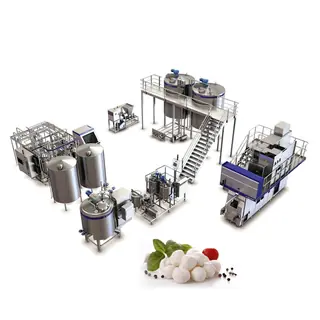
A complete list covers milk reception and storage, separator and pasteurizer, cheese vats, curd and whey handling, moulds and presses or a cooker-stretcher, a brine system, cold and ripening rooms, packing, CIP and utilities. Missing items, especially whey handling and brine cooling, are the most common gaps in quotations.
- Milk reception, filtration and cooled storage tanks
- Centrifugal separator for standardization (see our cream separator guide)
- Pasteurizer with holding and recording (see the milk pasteurizer buying guide)
- Starter culture preparation and dosing
- Cheese vats with cutting and stirring tools
- Whey drainage, fines removal, whey tank and pumps
- Moulds, presses, mould washer, or cooker-stretcher for pasta filata
- Brine tanks with circulation, filtration and cooling
- Ripening rooms with temperature and humidity control, or chilled storage
- Vacuum packing or waxing and labelling
- CIP system, hot water, chilled water and compressed air
- Commercial cheese making supplies: cultures, rennet, calcium chloride, salt and test kits
In the US, cheddar made from unpasteurized milk must be cured at not less than 35 °F (about 1.7 °C) for at least 60 days under 21 CFR 133.113, which shows how regulation can shape ripening room capacity. Check the rules in your own market early. If surplus cream is part of your plan, our butter making machine guide covers the butter side. For a packaged solution, compare our small turnkey cheese making plant and complete cheese production line, or browse the full cheese and butter equipment range.
What information do you need for a quotation?
To quote cheese making equipment we need the cheese types, daily milk volume and species, target output and pack format, how whey will be used, available utilities and local power supply, and the building layout. With these data our engineers can size vats, presses, brine and cold rooms as one balanced line.
- Cheese types and recipes (fresh, mozzarella, cheddar, Gouda, feta, other)
- Daily milk volume, species (cow, buffalo, goat, sheep, camel) and fat and protein levels
- Target cheese output per day and shift pattern
- Packaging: blocks, balls, slices, brined tins, vacuum packs and pack weights
- Whey plan: feed, drinks, concentration or disposal
- Utilities: steam or electric heating, chilled water, compressed air, water quality
- Power: voltage, phase and 50 Hz or 60 Hz, plus ambient conditions such as tropical heat
- Site: building size, existing equipment and room for ripening
Send these details through our quotation form or to [email protected], and our engineers will propose a layout and equipment list for your cheese plant.
Frequently asked questions
What cheese making equipment is needed to start a small plant?
A small cheese plant needs milk cooling and storage, a pasteurizer, a jacketed cheese vat with cutting and stirring tools, draining equipment, moulds, a cheese press or brine tank, a cold room and a cleaning system. Fresh cheese needs the least equipment; mozzarella adds a cooker-stretcher and hard cheese adds presses and ripening rooms.
How much pressure does a cheese press need?
According to the Tetra Pak Dairy Processing Handbook, cheese is pressed in 3–10 steps of increasing intensity, at pressures from about 50 up to a maximum of 450 g/cm² of cheese surface. Starting gently lets the rind close evenly; pressure then rises to consolidate the curd. Total mould residence is typically 60–100 minutes.
How is whey produced?
Whey is produced when rennet or acid coagulates the casein in milk and the curd is cut, stirred and drained. The liquid that separates from the curd is whey. It makes up 80–90% of the milk volume entering cheese making and contains most of the lactose plus soluble whey proteins, minerals and a little fat.
What size cheese vat do I need?
Divide your daily milk volume by the number of fills a vat can complete per shift. Hard and semi-hard cheeses need 90–120 minutes of curd making per batch, plus filling, emptying and cleaning, so a vat typically completes three or four fills per shift. A 2,000 L daily intake can run in one 1,000 L vat with two fills.
How much cheese do you get from 100 litres of milk?
As a rule of thumb, about 10 kg of milk makes 1 kg of cheese, so 100 litres of cow's milk gives roughly 10 kg of cheese for many varieties. Real yield depends on milk fat and protein, the cheese's moisture target and how well fat and casein are retained, so fresh high-moisture cheeses yield more than hard cheeses.
Do cheese moulds need to be stainless steel?
Not necessarily. Stainless steel moulds are durable and tolerate hot cleaning, while food-grade plastic moulds are lighter and common in automated lines. Whichever you choose, moulds must be food-contact approved, smooth and cleanable, and perforated to suit the cheese. The Tetra Pak handbook notes moulds pass a rinsing station about every 2 hours.
Sources
- Tetra Pak Dairy Processing Handbook – Cheese
- Tetra Pak Dairy Processing Handbook – Whey processing
- Cheesescience.org – Cheese yield
- University of Guelph – Cheese Making Technology e-book: Composition and yield control
- US eCFR via Cornell LII – 21 CFR 133.113 Cheddar cheese
- Tetra Pak Dairy Processing Handbook – Centrifugal separators and milk standardization